The challenge
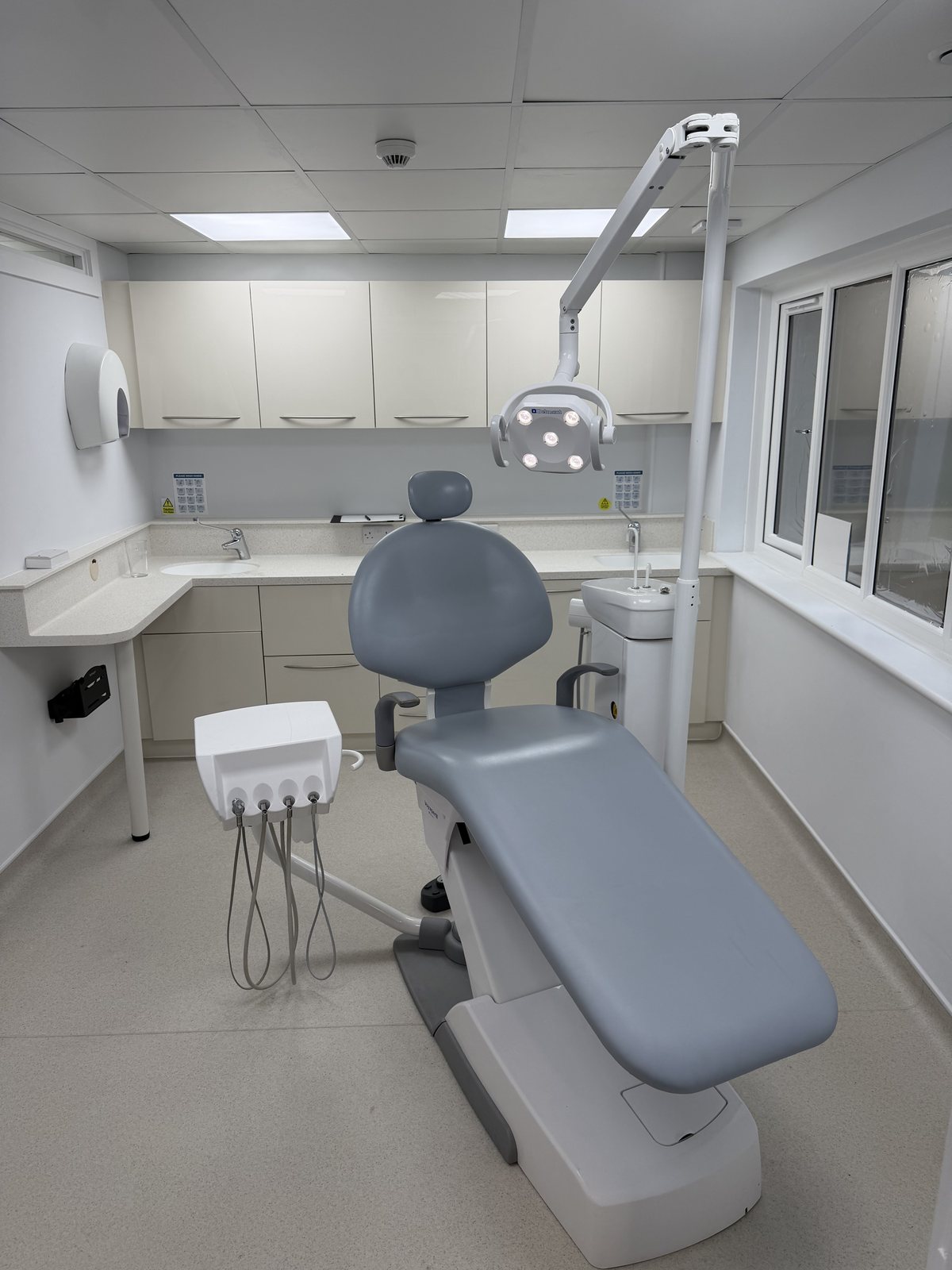
For a dental practice, compressed air has to be clean and dry — it drives every handpiece and triple syringe, and any moisture in the line ends up in the 3-in-1s and, ultimately, the patient's mouth.
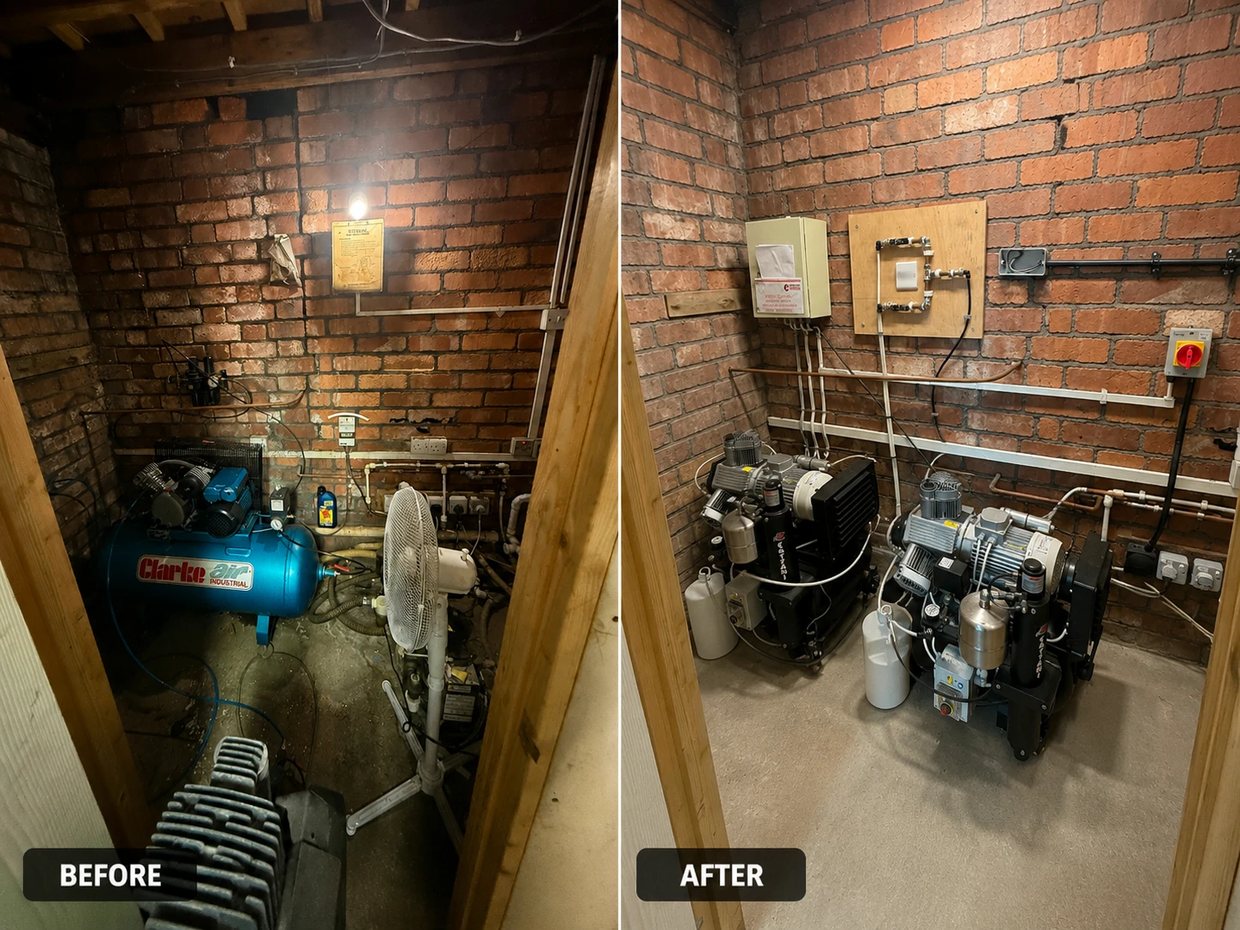
We were called out to a six-surgery practice on Parry's Lane in Bristol where water was getting into the air lines and coming through the 3-in-1 syringes. The cause was the compressor itself: an old general-purpose Clarke Air industrial single-head compressor — the kind you'd find in a workshop — running all six surgeries. Not dental-specific, with no proper air drying, and a single point of failure for the whole practice.
What we did
- Diagnosed the fault — moisture carrying through from an unsuitable, non-dental single-head compressor
- Removed the old compressor and designed a bespoke dental-specific compressed-air system in its place
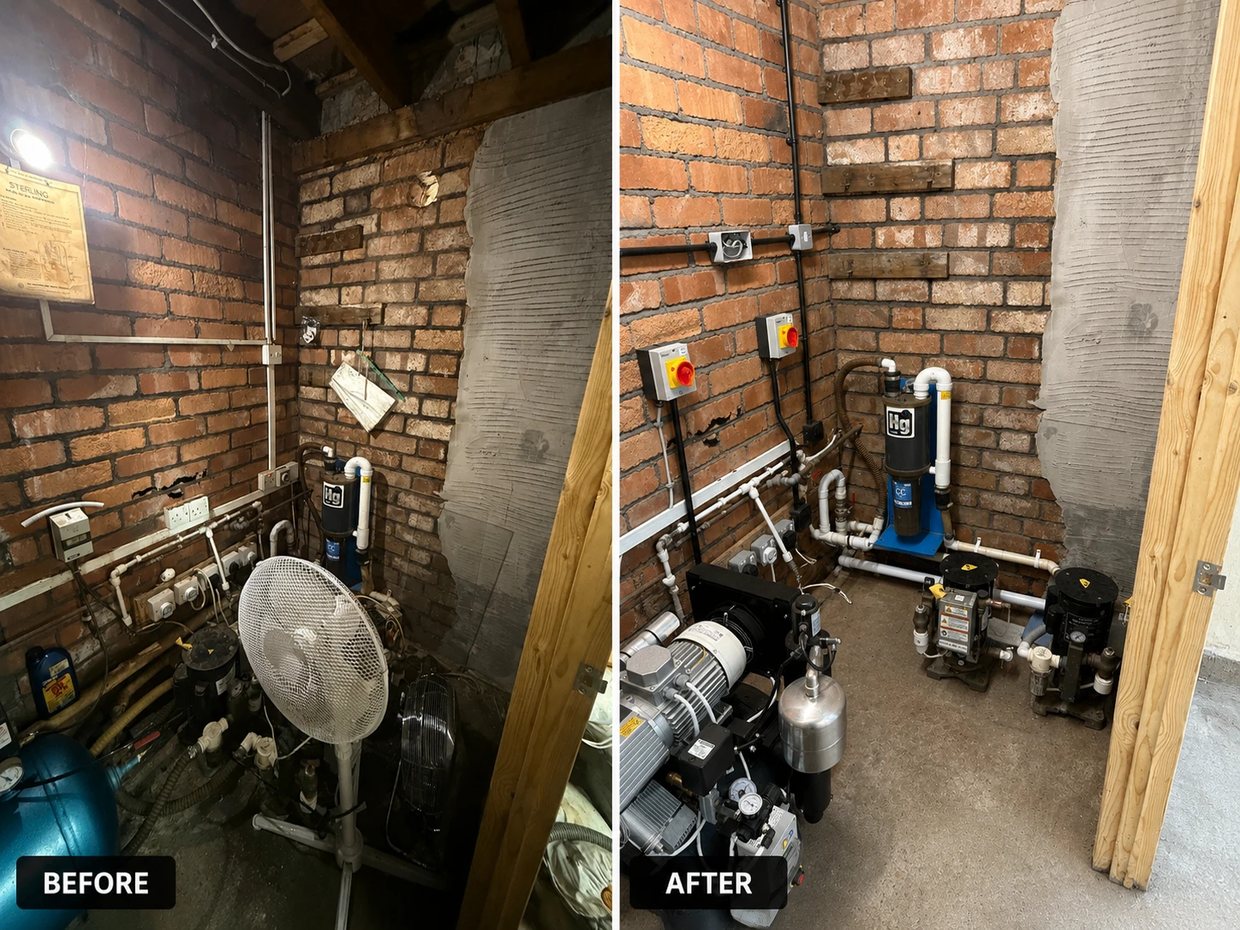
- Installed two Cattani AC300 oil-free compressors with a dryer stack to deliver clean, genuinely dry air
- Built a bespoke tandem control panel so both compressors run on one air line and pressure switch, set up for duty and redundancy
- Pressure-tested, commissioned and provided the written scheme of examination for PSSR compliance
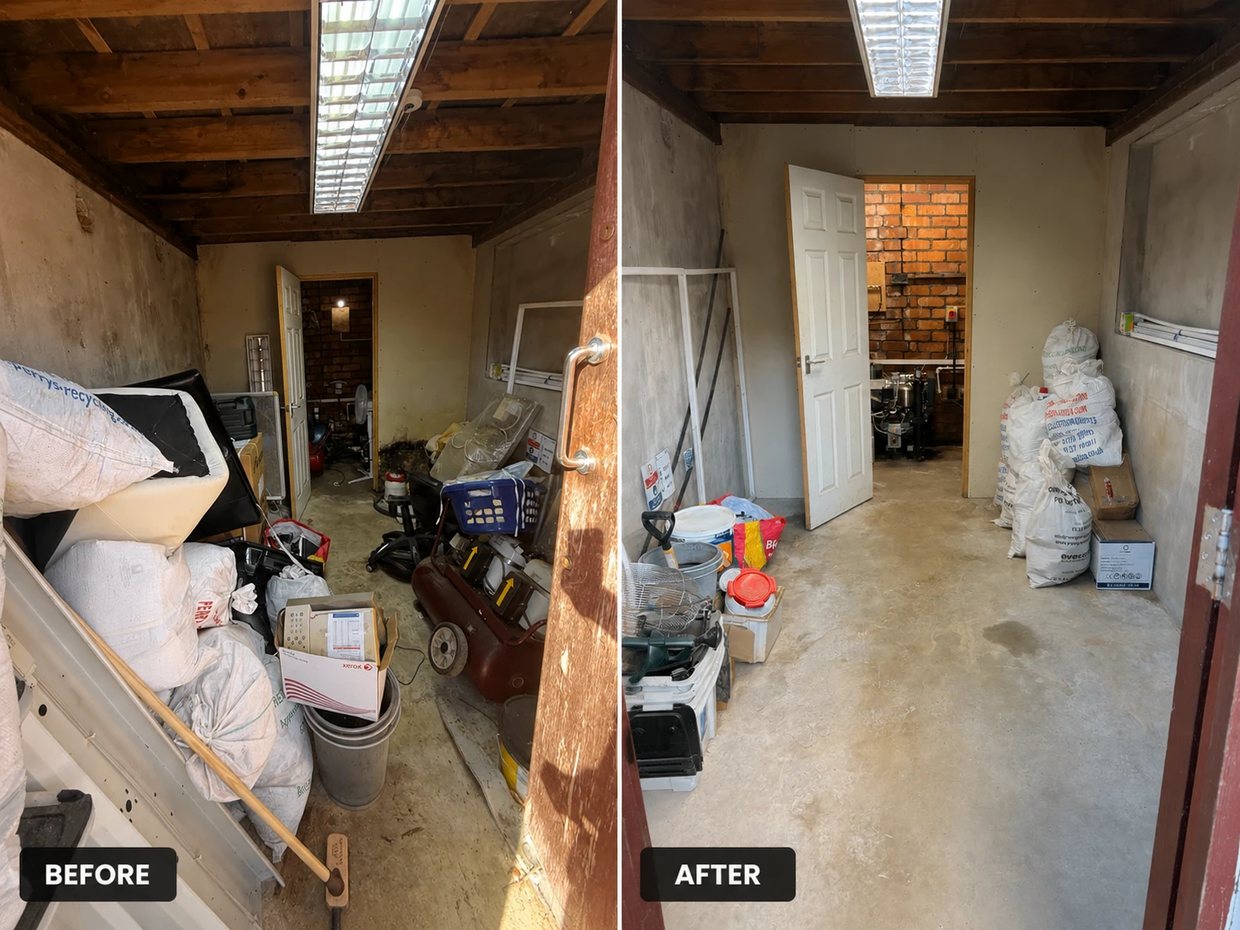
- Completed the whole changeover within one week
The result is a system built for a dental practice, not borrowed from a workshop. The dryer stack keeps moisture out of the lines and the 3-in-1s, and the tandem panel means the two AC300s work as one resilient unit — sharing the load day to day, and either one able to run all six surgeries on its own. A compressor failure that used to threaten the whole practice now becomes a planned repair instead of an emergency.
The result
Clean, dry compressed air across all six surgeries — no more water in the lines or the 3-in-1s — and a compressed-air setup with genuine redundancy designed in. The whole changeover was completed within a week.